
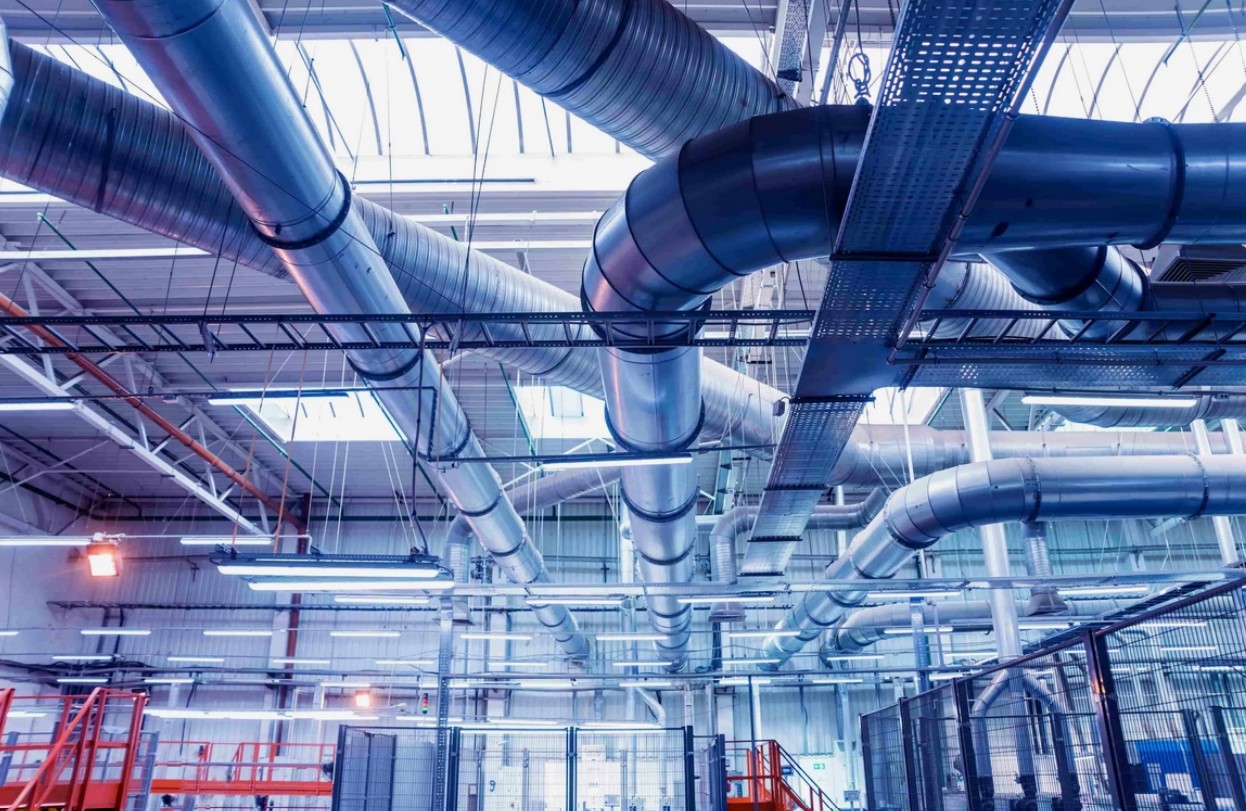
The thing about a manufacturing plant is that it can look calm from the office while the production floor tells a whole different story.
Where the machines are releasing heat throughout the day and loading doors keep opening while the dust and fumes need to be pulled away from work areas.
And so behind all of that is an HVAC system doing much more than keeping the building warm or cool.
Because unlike a normal home system the equipment inside an industrial property needs to control large temperature changes and move huge amounts of air while also protecting machinery and maintaining safe working conditions.
And it only takes one weak exhaust fan or a blocked filter to affect an entire production area.
So this guide explains how industrial HVAC systems work and why they are designed differently from standard heating and cooling equipment.
These Systems Have A Much Bigger Job Than The Basic Heating And Cooling Routine
A residential HVAC system mainly keeps the people inside a home comfortable. An industrial system may need to protect workers and products as well as sensitive machinery and production processes.
The system may serve:
- Manufacturing plants
- Warehouses
- Food processing areas
- Machine shops
- Distribution centres
- Workshops
- Cold storage facilities
- Large production spaces
Each building creates its own heating, cooling and ventilation demands. A warehouse with large open doors will not need the same setup as a facility that produces dust or chemical vapours.
That is why industrial HVAC design begins with the building and the work taking place inside it. Equipment should be selected around the actual heat load and air movement needs rather than only the size of the floor area.
The Ventilation Has To Carry Away All The Heat Dust And The Uncomfortable Fumes Away From The Workers
When it comes to an industrial ventilation system it sure brings in cleaner air into the building and removes the air that contains heat, dust, smoke odours or other unwanted material.
Also some facilities even use general ventilation that moves air through the whole building while others need local exhaust systems that capture the contaminants close to the machine or work process that creates them.
That is why the AMA explains that the ventilation part is an important engineering control for maintaining top industrial air quality.
And so a proper ventilation setup may include:
- Supply fans
- Exhaust fans
- Air ducts
- Collection hoods
- Filters
- Dampers
- Air makeup units
- Roof or wall vents
All because the system needs some real balance in removing large amounts of air without replacing as otherwise it can create pressure problems inside the building.
Where the doors may become difficult to open and outdoor air may be pulled through cracks or other uncontrolled openings.
Almost forgot here is another great piece on how you can test your HVAC air quality by Modern Pur Air.
Now This Process Cooling Thing Can Protect A Lot More Than The People Inside
Some industrial facilities produce so much heat that normal air conditioning cannot handle the full load.
Machinery and production equipment may need dedicated process cooling equipment to keep temperatures within a safe operating range. This can include chillers, cooling towers, pumps, heat exchangers or separate cooling loops.
Process cooling may protect:
- Production machinery
- Electrical equipment
- Server and control rooms
- Refrigerated work areas
- Products affected by heat
- Temperature sensitive materials
A failure in this part of the system can stop production even when the offices still feel comfortable.
That is why the cooling plan should separate human comfort needs from equipment needs. Both may use related equipment but they often require different temperatures, airflow rates and operating schedules.
When It Comes To The Controls They Can Keep Every Single Part Working Together
The thing about large systems is they often serve several areas that do not need the same temperature or airflow at the same time.
That is why the Industrial HVAC controls use all kinds of sensors, thermostats, timers and building control systems to manage how all the equipment responds.
And many modern controls can even track down temperature, pressure humidity and equipment operation across different zones.
So yeah these controls can help the facility:
- Change airflow during production hours
- Reduce operation in unused areas
- Maintain different temperatures between zones
- Alert staff when pressure or temperature changes
- Track equipment run times
- Identify faults before a full shutdown
A control problem can make healthy equipment appear faulty. A bad sensor may cause a fan to run longer than needed or stop cooling before the correct temperature is reached.
That is why diagnosis should include the control system and not only the mechanical equipment.
The Energy Use Can Rise Very Quickly When The Fans And The Motors Lose Their Top Efficiency
Industrial fans and motors may run for long periods every day so small efficiency losses can become expensive over time.
And so the most common causes of wasted energy can include:
- Dirty coils and filters
- Loose belts
- Worn fan motors
- Leaking ductwork
- Dampers stuck in the wrong position
- Poorly programmed controls
- Equipment running in empty areas
- A system that no longer matches production needs
Plus when it comes to improving efficiency repairing the airflow problems and updating controls can always deliver a noticeable improvement without a full equipment change.
Maintenance Here Is The King That Keeps Everything Under Control
The deal here is simple folks and that is when it comes to the basic heating and cooling house equipment it can be checked once or twice a year but the industrial HVAC maintenance often needs a more detailed schedule.
Where the correct timing depends on how many hours the system runs and what moves through the air.
And that is why its strong maintenance plan should include:
- Checking filters and air pressure
- Inspecting belts bearings and motors
- Cleaning coils and drain systems
- Testing safety controls
- Checking exhaust and makeup air
- Inspecting ductwork and dampers
- Looking for refrigerant or water leaks
- Reviewing control system alerts
- Confirming airflow in critical areas
That is why you need to trust Specialized Aire Systems for their industrial HVAC services because they can give you the top quality fixes and repairs that leave no loose ends ever.
So just call Specialized Aire Systems and let’s make your facility comfortable, safe and ready for some real good production.
Leave A Comment